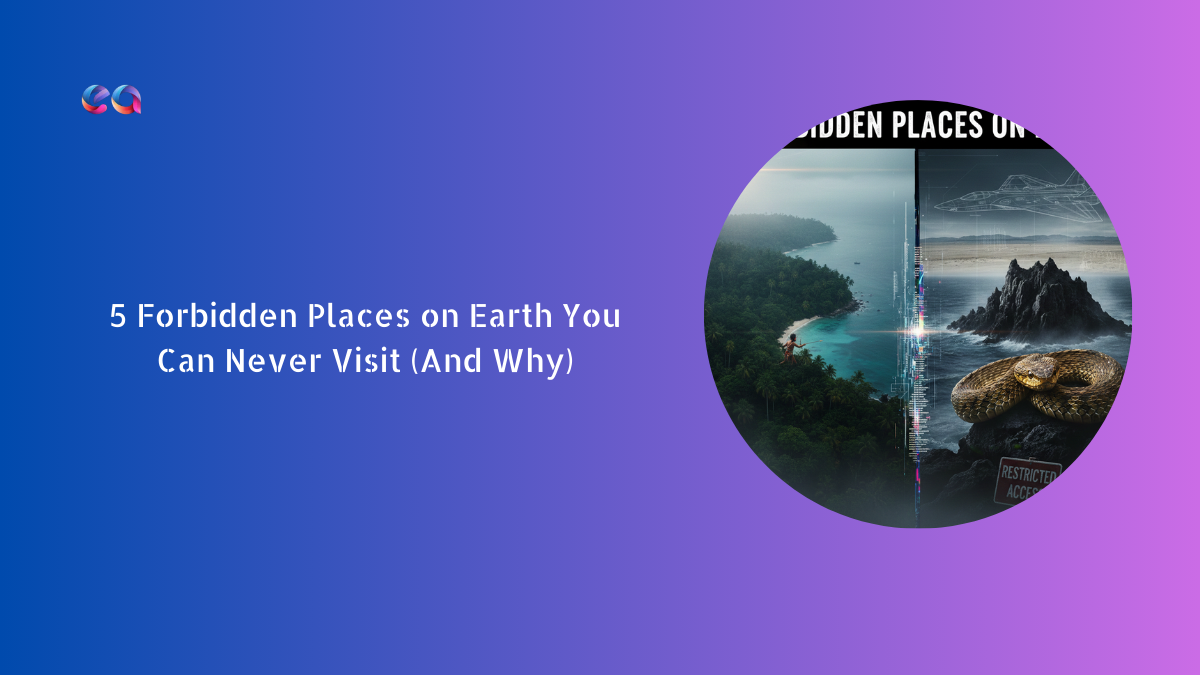


In a world defined by hyper-connectivity and endless travel options, it is tempting to believe that every corner of the globe is accessible. Digital maps allow us to zoom in on remote islands, satellite imagery offers a window into classified military bases, and documentaries explore the deepest jungles. Yet, a handful of locations remain stubbornly, definitively off-limits. These are not merely difficult-to-reach destinations; they are places where entry is strictly prohibited, enforced by everything from international treaties and military patrols to lethal wildlife and ancient cultural law.
The human desire to explore is primal, but in the case of these forbidden zones, the most responsible form of exploration is respectful restraint. The reasons for these bans are as diverse as the geographies themselves, ranging from crucial environmental conservation and scientific necessity to the protection of ancient heritage and the unwavering demands of national security.
This is the definitive guide to the world’s five most restricted destinations—places that are truly inaccessible to the general public. Our analysis goes beyond simple facts, delving into the legal, ecological, and ethical reasons behind these enduring restrictions, demonstrating why these unseen sanctuaries are vital not only to the planet’s history and biodiversity but also to our collective future. This is a deep dive into the places we must never set foot in, ensuring we prioritize their preservation over our curiosity.
Table of Contents
The Cultural Fortress: Preserving the Last Uncontacted Society
One of the most profound restrictions on earth is not enforced by concrete walls or high-voltage fences, but by the principle of non-interference. It is an acknowledgment that some cultures have the right to exist entirely on their own terms, untouched by the modern world—and that contact, even with the best intentions, poses an existential threat to them.
North Sentinel Island, India: The Land That Rejects the Modern World
Location: Bay of Bengal, part of the Andaman Islands, India. Primary Restriction: Protection of the indigenous inhabitants (the Sentinelese people) and enforcement of voluntary isolation.
North Sentinel Island is perhaps the most famous and culturally sensitive restricted area on the planet. Its beaches are idyllic, framed by dense jungle, but the interior is home to the Sentinelese, a small tribe estimated to number between 50 and 150 individuals, who have maintained a virtually uncontacted existence for an estimated 60,000 years. Their isolation represents one of the final remaining windows into Paleolithic human life.
The Existential Threat of Contact
The ban on visiting North Sentinel Island is enforced by the Indian government and stems from a dual imperative: to protect the tribe and to protect outsiders.
- Protecting the Sentinelese: The most critical reason for isolation is biological. The Sentinelese have no developed immunity to common modern diseases, such as the flu, measles, or even the common cold. A single infection brought by an outsider could wipe out the entire population. Anthropologists and public health officials widely agree that forced contact would constitute cultural genocide.
- Protecting Outsiders: The tribe fiercely defends its autonomy, communicating its desire to be left alone by firing arrows and spears at any vessel or aircraft that comes too close. This has led to fatal encounters, including the tragic deaths of two fishermen in 2006 and an American missionary in 2018.
The Legal and Ethical Framework
The legal structure enforcing the ban is the Andaman and Nicobar Islands Protection of Aboriginal Tribes Regulation, 1956 (PAT Act), which prohibits access to the island and its buffer zones. The Indian government has adopted a policy of “active monitoring and non-interference,” recognizing the Sentinelese’s right to self-determination.
From an ethical perspective, the island serves as a profound global lesson in respecting boundaries. The land itself is not what is being preserved; it is the unique cultural trajectory and the right of a people to choose their own destiny. The experience of the island, for the vast majority of humanity, is one of recognizing the value of the unknown and the imperative of restraint, a concept often lost in the age of total knowledge. The island is not a tourist attraction; it is a living anthropological boundary that defines the limits of our modern reach.
The Conservation Cathedrals: Protecting History from Humanity
Sometimes, a restriction is imposed not because of what a place contains today, but because of what it holds from the past. The physical presence of humans—our breath, our footsteps, and the microbes we carry—can be devastating to the world’s most delicate historical records.
The Lascaux Caves, France: A Race Against Time and Fungus
Location: Montignac, in the Dordogne region of Southwestern France. Primary Restriction: Conservation of priceless Paleolithic artwork from microbial contamination and atmospheric damage.
Deep within the hills of France lies a network of caves that contain one of the most magnificent artistic achievements of prehistory: the Lascaux cave paintings. Discovered in 1940, these stunning murals of horses, stags, bison, and mythical figures are approximately 17,000 years old. They immediately captured the world’s imagination and were quickly opened to the public, setting the stage for an unforeseen ecological disaster.
The Human-Induced Catastrophe
From 1948 to 1963, over one million visitors entered the caves. This massive influx of humanity fundamentally altered the cave’s delicately balanced microclimate, a perfect, unchanging environment that had preserved the art for millennia.
The core agents of destruction were:
- Carbon Dioxide (CO₂): Exhaled by visitors, the CO₂ combined with the cave’s moisture to form carbonic acid, which slowly dissolved the limestone walls, damaging the pigments.
- Moisture and Temperature: Human breath and body heat raised the humidity and temperature, creating ideal conditions for fungal and bacterial growth.
- Microbial Invasion: Foreign microbes carried on clothing, shoes, and skin introduced aggressive species of fungi, resulting in what conservators termed the “Green Sickness” and, later, the catastrophic “Black Mold” epidemic.
By 1963, French authorities realized that the cave was being destroyed in real time. The decision was made to close the original Lascaux to the public indefinitely. Only a small handful of scientists and conservationists are permitted entry for short, highly controlled inspections, often wearing full hazmat-style suits to minimize contamination.
The Art of the Substitute Experience
The legacy of Lascaux demonstrates a modern solution to the paradox of preservation and access. Recognizing the immense cultural value of the artwork, the French government invested heavily in creating state-of-the-art, high-fidelity replicas:
- Lascaux II: The first replica, focused on the main gallery.
- Lascaux IV (Lascaux International Centre for Parietal Art): A full, technologically advanced recreation of the entire cave system, providing visitors with an immersive and authentic experience that satisfies curiosity without risking the originals.
The experience of Lascaux is no longer about physical presence, but about scientific reverence. The ban on entry transforms the site from a mere tourist spot into a global monument to conservation ethics. It stands as a silent reminder that some treasures are too fragile for direct human interaction and must be experienced through the lens of preservation.
The Ecological Laboratory: Where Nature Demands Isolation
Not all restricted areas are ancient or secretive. Some are newly formed environments that must be kept pristine for one of the most important scientific pursuits on Earth: observing the untainted birth and evolution of an ecosystem.
Surtsey Island, Iceland: The Planet’s Newest, Most Protected Land
Location: Vestmannaeyjar archipelago, off the southern coast of Iceland. Primary Restriction: Exclusive access for geologists and biologists to study primary ecological succession.
Surtsey is a volcanic island that literally rose from the sea. Its formation began with an underwater eruption in November 1963 and ended four years later, in 1967. The island, which reached a peak size of 2.7 square kilometers (1.0 sq mi), is now slowly shrinking due to coastal erosion, but its scientific value remains immense.
A Blank Slate for Life
The moment Surtsey stabilized, it became a blank biological slate. Since the island had no pre-existing life, scientists gained a rare, invaluable opportunity to observe, from the ground up, how an ecosystem begins. This process, known as primary ecological succession, involves tracking the colonization of life—from the arrival of the first microbes, fungi, and seeds to the establishment of vascular plants, insects, and birds.
To ensure the integrity of this natural laboratory, the Icelandic government imposed a strict ban on all public entry. Surtsey was designated a nature reserve in 1965, and in 2008, UNESCO recognized it as a World Heritage Site, affirming its status as a site of exceptional global scientific interest.
The Integrity of the Experiment
The key to Surtsey’s value is the absolute minimization of human interference. The few scientists permitted to land—often only once per year and under strict quarantine-like conditions—must adhere to rigid protocols:
- No Contamination: Scientists must sterilize all equipment and clothing to ensure they do not introduce foreign seeds, spores, or insects that could skew the research.
- The Tomato Seed Incident: In one famous anecdote, a research team discovered a patch of tomato plants growing on the island. A quick investigation revealed that a scientist had defecated outdoors, and a viable tomato seed in his waste had germinated. The plants were immediately destroyed. This incident highlights the fragility of the “pristine” label and the need for zero tolerance for contamination.
The experience of Surtsey is one of distant observation. While tourists can view the island from the air via small aircraft tours, the land itself is reserved for the slow, quiet processes of nature. It is a fundamental global research site, where every new species of moss, every migrating gull, and every shifting grain of volcanic sand contributes to our understanding of evolution and the tenacity of life.
The Perilous Biome: Safety and Species Protection
Some restricted areas are not closed due to human activity, but because of the sheer biological danger they pose. When an ecosystem evolves in isolation, it can create concentrations of danger that are entirely incompatible with human presence.
Ilha da Queimada Grande (Snake Island), Brazil: The Viper’s Domain
Location: 93 miles off the coast of São Paulo, Brazil. Primary Restriction: Extreme danger to humans from a massive population of endemic, highly venomous snakes, coupled with the need to protect this critically endangered species.
Known universally as Snake Island, Ilha da Queimada Grande is an ecological anomaly. This small, 106-acre landmass is the sole natural habitat for one of the world’s most deadly serpents: the Golden Lancehead Viper (Bothrops insularis).
The Evolutionary Arms Race
Estimates of the snake population vary wildly, but the density is staggering—some studies suggest there is at least one snake per square meter in the central parts of the island. The vipers evolved on the island after rising sea levels cut them off from the mainland. Because their primary food source was migratory birds, the vipers developed two key characteristics to ensure successful hunting:
- Arboreality: They are adept at climbing trees and ambushing birds in flight.
- Hyper-Potent Venom: Since a bitten bird might fly away before the snake could track it, the venom evolved to be incredibly fast-acting and powerful, far more potent than its mainland relatives.
The Golden Lancehead venom is a necrotizing cocktail that can cause rapid tissue death, kidney failure, internal bleeding, and, if left untreated, death.
Enforcement by Nature and Navy
The Brazilian Navy enforces a strict ban on all public access to the island. While the prohibition protects curious humans from an almost certain, lethal bite, it also serves to protect the critically endangered Golden Lancehead.
- Preventing Biopiracy: The snake’s unique venom has been the target of bioprospecting—illegal attempts to capture the snakes for the valuable compounds in their venom, which scientists believe holds potential for pharmaceuticals.
- Lighthouse Keepers’ Legacy: Historical accounts, including the final, gruesome story of the island’s last lighthouse keeper and his family, are a visceral reminder of the island’s danger. The lighthouse is now automated, ensuring no permanent human presence is necessary.
The experience of Snake Island is a chilling testament to the power of specialized evolution. It is one of the few places on Earth where nature provides its own highly effective security, guarding a unique piece of biodiversity that is far too dangerous for human tourism. The ban on entry is, quite simply, a matter of survival—for both species.
The Veil of Secrecy: National Security and Classified Research
The final category of forbidden places involves governmental control, where the official restriction is based on the highest level of national defense and classified activities. These locations are shielded not by environmental concerns but by legal statutes and armed guards.
Area 51 (Groom Lake), USA: Beyond the Perimeter
Location: Southern Nevada desert, near the town of Rachel, USA. Primary Restriction: Classified military installation for the testing and development of experimental aircraft and weapons systems; enforced by U.S. Federal Law.
Area 51 is arguably the most famous and culturally significant restricted military zone in the world. While officially known as Homey Airport or Groom Lake, its decades-long history of secrecy has cemented its place in the public imagination as the epicenter of UFO and alien conspiracy theories.
The History of Classified Flight
The real reason for the intense restriction is far more terrestrial, though no less fascinating. The facility was established during the Cold War in 1955 primarily as a secret testing ground for advanced reconnaissance aircraft, including the U-2 spy plane and later the legendary SR-71 Blackbird. Its remote location in the Nevada desert, adjacent to a vast nuclear testing site, provided the perfect blend of isolation and secure airspace.
The strict secrecy was necessary because the projects being developed offered the United States a critical technological edge over its rivals. Any unauthorized observation would have compromised national security and given adversaries valuable intelligence. The bizarre sights reported by pilots and remote workers—unusual shapes flying at impossible speeds and altitudes—were the classified prototypes being tested, which naturally fueled the early UFO folklore.
The Perimeter and the Price of Curiosity
Today, the base is still highly operational and the restrictions are severe, enforced by the U.S. Air Force. Access is blocked many miles away from the perimeter fence.
- The “Camo Guys”: The perimeter is patrolled by private security guards, colloquially known as the “Camo Guys” (or contractors for the military police), who drive unmarked trucks and monitor the boundary via motion sensors and advanced surveillance equipment.
- The Warning: Signs clearly state that the use of deadly force is authorized against trespassers. Penalties for unauthorized entry or photography can include severe fines and federal imprisonment.
While the base itself remains off-limits, the surrounding area has become an unconventional tourist destination, feeding into the UFO mythology. The town of Rachel, Nevada, which markets itself as the “UFO Capital of the World,” capitalizes on the mystique. The experience of Area 51, for the public, is limited to observing the warning signs, gazing across the barren landscape toward the distant mountains, and grappling with the enduring tension between governmental secrecy and public transparency.
The Imperative of Non-Entry: A Call for Responsible Global Engagement
The five locations detailed above—North Sentinel Island, Lascaux Caves, Surtsey Island, Ilha da Queimada Grande, and Area 51—represent five distinct, yet equally compelling, rationales for setting boundaries on human travel. They underscore a critical truth: not every place on Earth is intended for human consumption or exploration, and in many cases, our absence is the most valuable contribution we can make.
Why Restraint is the Highest Form of Respect
The comprehensive restrictions imposed on these sites are not arbitrary acts of government control or simple bureaucratic decisions. They are informed by deep-seated ethical, scientific, and safety mandates:
- Ethical Preservation: The ban on North Sentinel Island is a moral stance, protecting an indigenous group’s right to self-determination and preventing certain annihilation from disease.
- Scientific Purity: Surtsey Island’s off-limits status is a dedication to scientific integrity, ensuring that a natural evolutionary process is documented without man-made contamination. This data is crucial for understanding how life colonizes the planet.
- Cultural Duty: The closure of the Lascaux Caves is a commitment to conservation, safeguarding a 17,000-year-old human archive from destruction by the very people who cherish it.
- Species Survival and Safety: Ilha da Queimada Grande is protected for the dual purpose of shielding a critically endangered species from smugglers and biopiracy while protecting human life from an evolved, concentrated danger.
- National Stability: Area 51’s boundaries maintain a critical component of national security and military technological superiority, a function central to international affairs.
The True Value of the Forbidden
For the audience, the true value of knowing about these forbidden places lies not in a list of inaccessible sites, but in understanding the deeper context of preservation and responsibility. These sites serve as global benchmarks for the necessary limits of human curiosity. They teach us that high-quality, people-first engagement with the world often involves learning from afar, supporting research, and respecting boundaries.
Instead of trekking to the perimeter of Area 51, we can support the ongoing development of aviation technology. Rather than attempting a reckless trip to the Andaman Islands, we can advocate for the rights of uncontacted tribes worldwide. By embracing the scientific discoveries emerging from Surtsey and Lascaux’s replicas, we participate in their heritage without causing harm.
Ultimately, these five restricted zones are not frustrating barriers to travel; they are some of the most protected, valuable, and ethically managed places on our planet. They demonstrate that the greatest acts of exploration can often be found in the deliberate decision to keep a secret safe, a people isolated, and an ecosystem pristine. They are the guardians of our past, the laboratories of our future, and a permanent, necessary challenge to the notion that humanity must conquer every frontier. Responsible global citizenship means recognizing that some boundaries must be absolute, and that the unseen earth is often the most important part of the map.